
Back end
Node.js development for APIs, integrations, and back-end services
Node.js lets us use JavaScript and TypeScript on the server as well as in the browser.
Why we use it
Why we build with Node.js
Node.js lets us use JavaScript and TypeScript on the server as well as in the browser. That means one language across the stack, shared types between front end and back end, and fewer handoffs. It handles many simultaneous connections well, which suits APIs, webhooks, and anything that waits on other services.
What we build
What we build with Node.js
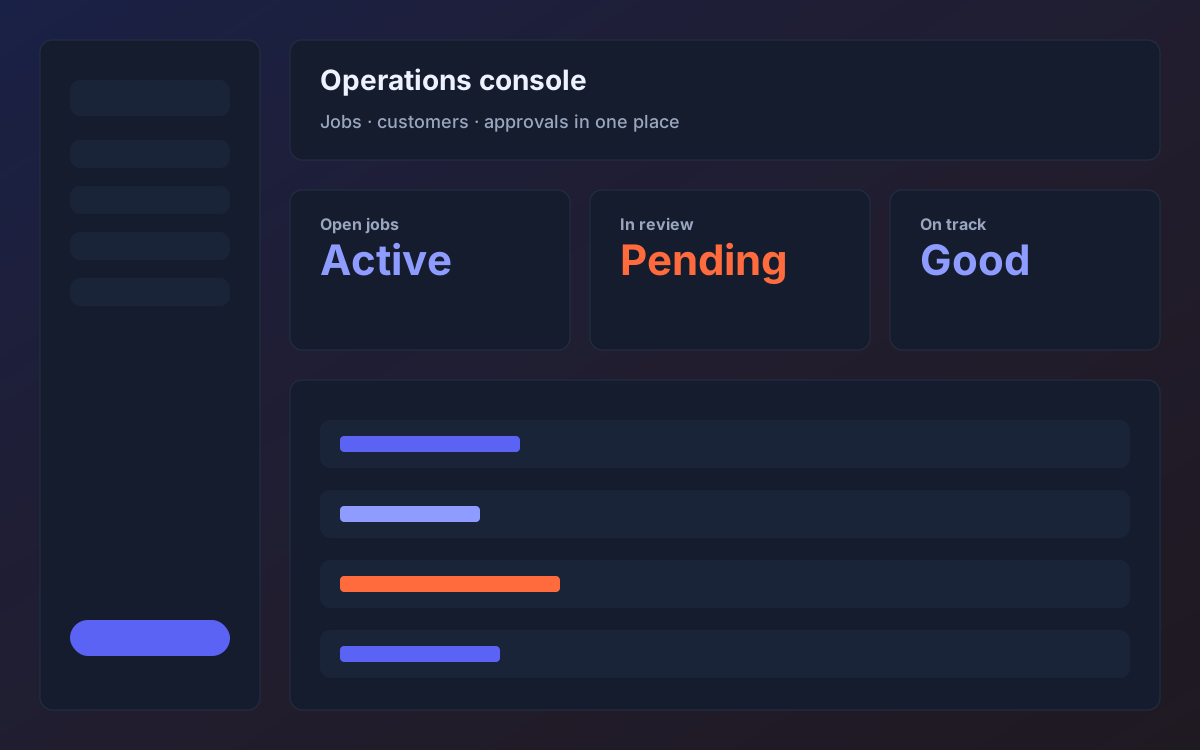
REST and GraphQL APIs
Back ends that serve your web app and mobile apps from one source of truth, with authentication and role-based access.
Third-party integrations
Connections between your software and tools like payment processors, CRMs, accounting systems, email, and SMS providers.
Webhook and background job processing
Reliable handling of incoming events and scheduled tasks such as reminders, syncs, and report generation.
Real-time features
Live status updates, notifications, and chat-style features where users should not need to refresh the page.
How it fits our stack
What we pair it with
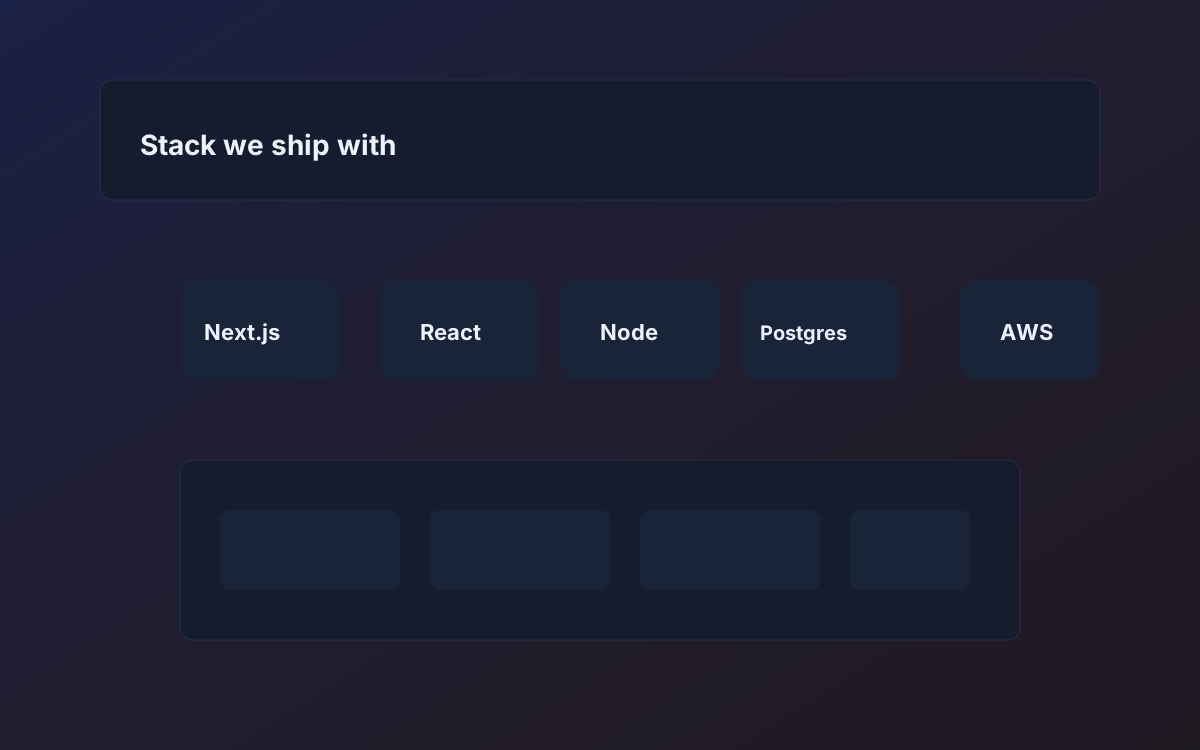
Node.js commonly sits behind a Next.js or React front end, or behind a React Native or Flutter app, with PostgreSQL as the database. Hosting on AWS is a common choice when you need more control than a managed platform gives you.
Honest advice
When something else is better
For heavy data processing, machine learning, or document analysis, Python is usually a better fit. If your team or existing system is built on Laravel and you only need to add features, adding a second back-end language rarely pays off. We would keep to what you already have.
FAQ
Frequently asked questions
Do you use TypeScript with Node.js?
Yes, by default. It catches many mistakes before they reach users and makes the code easier for the next developer to pick up.
Can you integrate with software we already use?
Usually, if the tool offers an API or webhooks. We check the documentation and limits before we promise anything.
Is Node.js secure enough for business data?
Security depends on how it is built and hosted. We use access controls, encrypted credentials, and standard practices, and we keep dependencies updated during support periods.
Can one back end serve both web and mobile apps?
Yes. That is a common setup and often saves money compared with building two separate back ends.
Keep exploring
Related pages
Next step
Thinking about Node.js for your project?
Tell us what you want to build and we will say plainly whether it is the right fit.
- Fixed scope
- Weekly demos
- You own the code