
Service
A product retainer that keeps your software moving after launch
Agreed monthly capacity for fixes, small features and upkeep from the team that already knows the product. You set the backlog; we keep it healthy and shipping.
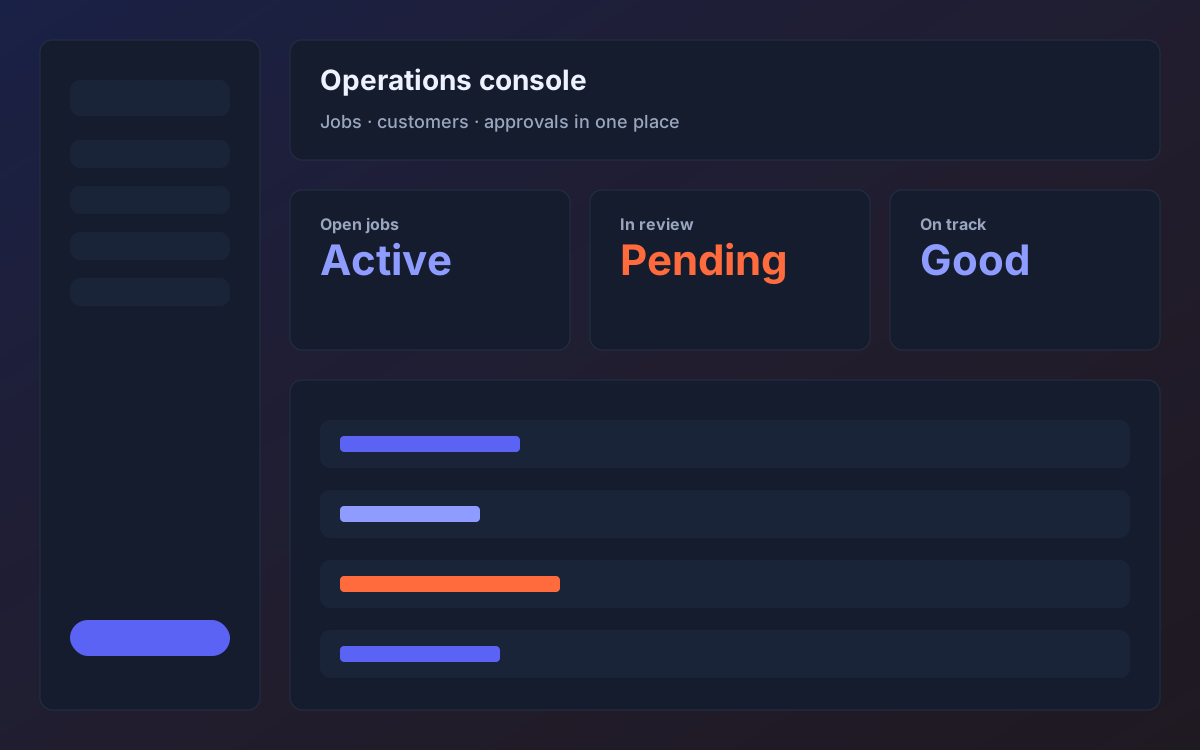
Launch day is the start of the expensive part of owning software. Dependencies age, a third-party API changes its terms, support asks for “one small tweak” and users find paths nobody tested. Without someone accountable for the product after go-live, small problems pile up until the next big project becomes a clean-up.
A retainer gives you a standing slice of our team each month. Capacity is agreed in advance, the backlog is yours to reorder and the people doing the work already know why the code looks the way it does. That context is what makes a two-line fix a two-line fix instead of a day of archaeology.
We split the month between three buckets that you can see and steer: keeping the lights on, fixing what users report and building what moves the business forward. Every month you get a short written account of how capacity was used, so the retainer is easy to justify internally and easy to resize.
The problems
What usually goes wrong
Nobody owns the product after launch
The project team has moved on, internal staff are busy elsewhere and bugs wait in an inbox. Users lose patience before anyone triages the report.
Upkeep keeps getting postponed
Framework upgrades, expiring certificates and vulnerable packages are never urgent until they are an outage. Deferred maintenance compounds.
Every small change needs a new quote
A copy change or a new report column turns into a sales conversation. Small wins stall because the overhead outweighs the work.
Re-briefing a stranger each time
Using a different vendor for each task means paying again to explain the same architecture. Quality varies and context never accumulates.
What you get
Deliverables
Reserved monthly capacity
An agreed number of days held for your product. You are not queuing behind other clients when something breaks.
A backlog you control
A shared board where you rank bugs, improvements and ideas. We estimate and flag dependencies, you decide the order.
Maintenance and dependency upkeep
Scheduled updates to packages, runtimes and certificates, with changes tested before they reach production.
Monitoring and incident follow-up
Error tracking and uptime checks set up or reviewed, plus written follow-up when something goes wrong so the same issue does not repeat.
Feature work in small slices
Improvements shipped in short cycles with a demo, so value arrives continuously instead of in one large release.
Monthly usage summary
How capacity was spent, what was delivered, what is queued and what we recommend next month.
How it works
Step by step
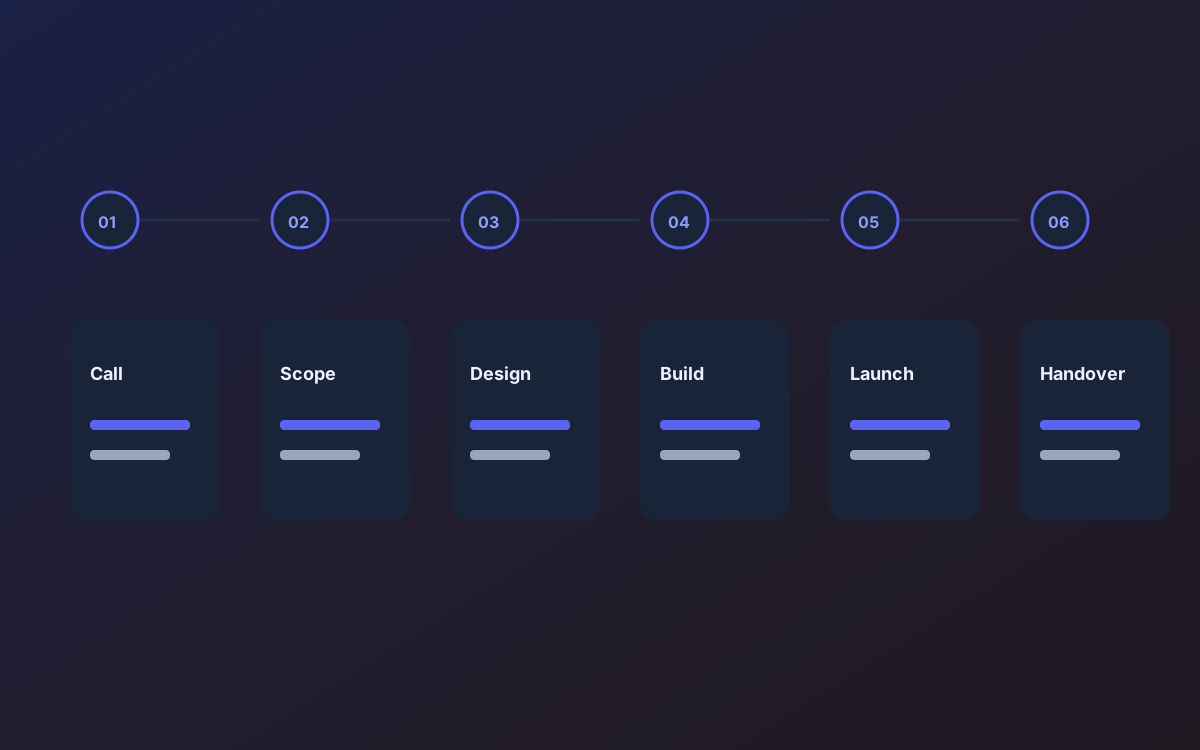
01
Product health check
We review the repository, deployment, monitoring and open issues so the first month starts from facts rather than assumptions.
02
Agree capacity and priorities
We set monthly capacity, response expectations for urgent issues and the categories of work the retainer covers.
03
Seed and rank the backlog
Known bugs, upkeep tasks and growth ideas go onto one board. You rank them and we flag what is risky or larger than it looks.
04
Ship in short cycles
Work moves through the backlog with weekly demos. Urgent fixes can jump the queue by agreement.
05
Review and resize
Each month we look at the summary together and raise, lower or reshape capacity to match what the product needs.
06
Report and recommend
Every month closes with a short report on capacity used, work shipped and risks spotted, plus a recommendation for the following month, so decisions about the retainer rest on evidence.
Timeline
How long it typically takes
A retainer can usually start within a week or two once capacity and scope categories are agreed, with the product health check taking a few days. Initial terms are often a few months, after which the arrangement commonly continues month to month. Response targets for urgent issues are written into the proposal rather than implied.
Who it's for
- Teams that just launched and need an accountable partner for the first year of real usage
- Businesses running a custom internal system that has no in-house engineer
- Founders who want steady product progress without managing contractors
Who it's not for
- Products with no live users or no backlog yet, where a project or MVP fits better
- Teams expecting unlimited changes for a flat monthly fee
- Companies that require a contractual twenty-four-hour on-call service
Keep exploring
Related pages
FAQ
Frequently asked questions
Do you take over software someone else built?
Often, yes. We begin with a health check of the code, deployment and open issues, and tell you plainly what is sound and what needs attention before we commit to a capacity.
What counts as urgent and how fast do you respond?
We define severity levels and target response times together and write them into the proposal. We do not promise round-the-clock coverage unless it is specifically agreed.
What happens to unused capacity?
How unused days are treated, whether carried forward within limits or released, is spelled out in the proposal so nobody argues about it later.
Can we pause or end the retainer?
Yes, after the initial term, with notice stated in the agreement. You keep the code, documentation and access throughout, so stopping never leaves you stranded.
Can larger features be handled under the retainer?
Small and medium slices fit well. For a large new module we usually scope it separately as a fixed-price project so the budget and dates are explicit.
Will you work alongside our internal team?
Yes. A retainer often sits beside in-house staff and picks up the work they have no time for. We use your repositories, tracker and review process, and agree on who owns which areas of the code.
Next step
Tell us what you want to build
A short call, then a written scope in plain language before any build starts.
- Fixed scope
- Weekly demos
- You own the code